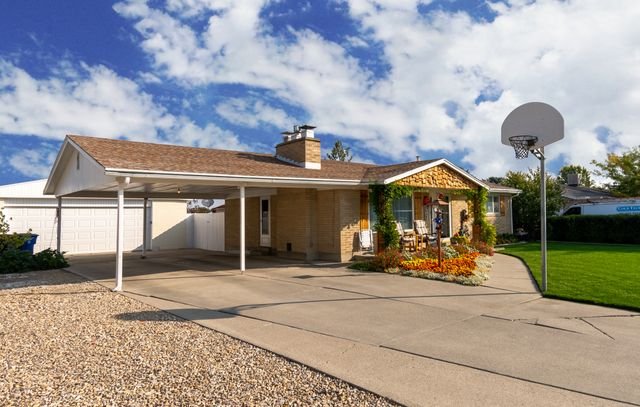
A concrete driveway can look strong and solid once it has cured, but much of its long-term performance depends on what sits underneath it. If the soil is soft, poorly compacted, wet or uneven, the concrete above can eventually move, crack or settle.
Knowing how to prepare soil before a concrete driveway pour is therefore just as important as choosing the concrete mix or surface finish. The preparation process usually involves removing unsuitable material, establishing the correct levels, preparing the subgrade, adding and compacting a suitable base where required, and making sure water can drain properly.
For Adelaide properties, soil conditions can vary considerably. South Australia’s Department for Environment and Water maintains detailed soil and landscape information because soil characteristics influence water movement and the suitability of land for different uses.
A good driveway preparation process should account for the actual site rather than relying on a one-size-fits-all approach.
Why Soil Preparation Matters Before Pouring Concrete
Concrete is strong in compression, but the slab still relies on the ground beneath it for uniform support.
If one section of the driveway is supported by firm, compacted material while another sits over loose fill or soft soil, the two areas can behave differently.
That can contribute to:
- Settlement
- Cracking
- Uneven surfaces
- Edge movement
- Water pooling
- Problems around the garage entrance
- Premature deterioration
The objective is not simply to make the ground look flat. The aim is to create a stable, reasonably uniform and properly drained foundation for the driveway.
This becomes particularly important when replacing an old driveway, filling an area that previously contained garden beds, or constructing over ground that has been disturbed.
Step 1: Remove Topsoil, Organic Material and Unsuitable Ground
The first stage is usually excavation.
Garden soil, turf, roots, mulch and other organic material are generally unsuitable as the supporting layer directly beneath a concrete pavement. They can decompose, change volume and leave voids.
The exact excavation depth depends on the proposed driveway design, existing levels, soil conditions and the required pavement construction.
The contractor should assess what is actually encountered once excavation begins.
Don’t assume the soil is uniform
A driveway site can contain several different materials.
For example, one section may contain natural soil while another may contain:
- Previous landscaping fill
- Old construction material
- Loose sand
- Clay
- Gravel
- Demolition debris
- Uncontrolled fill
South Australia’s soil information resources show that the state contains a wide range of soil groups and characteristics.
If unexpected material is discovered during excavation, it should be assessed rather than simply covered with concrete.
Step 2: Establish the Correct Driveway Levels
Once unsuitable material has been removed, the driveway area needs to be brought to the correct formation level.
This involves considering the finished driveway height as well as the thickness of the concrete and any granular base underneath.
Levels should also account for:
- Garage floor height
- Property boundary
- Footpath
- Kerb
- Road level
- Drainage
- Existing buildings
- Neighbouring surfaces
This is particularly important on sloping Adelaide blocks.
A driveway that is prepared at the wrong level can create drainage problems even if the concrete itself is installed correctly.
For driveway crossovers within the road reserve, the relevant council’s engineering drawings and approval requirements also need to be followed. West Torrens, for example, publishes separate drawings for residential driveway crossover layouts and sections.
Step 3: Inspect the Existing Subgrade
After excavation, the exposed soil becomes the subgrade.
This is the foundation layer supporting the driveway pavement system.
The subgrade should be inspected for obvious soft spots, excessive moisture, loose material and inconsistent ground conditions.
A simple visual inspection can identify some problems, but more complex sites may require engineering or geotechnical assessment.
This is particularly relevant where there is:
- Significant uncontrolled fill
- Highly reactive clay
- Poor drainage
- Previous excavation
- Major changes in ground level
- Evidence of settlement
- Soft or collapsing soil
South Australian government geotechnical documentation demonstrates that soil profiles around Adelaide can include materials with different shrink-swell characteristics and site classifications.
That does not mean every Adelaide driveway requires a geotechnical investigation. It means the soil beneath the proposed driveway should not be assumed to behave identically on every property.
Step 4: Compact the Subgrade Properly
Compaction is one of the most important parts of driveway preparation.
Loose soil contains air spaces. Mechanical compaction reduces those voids and produces a denser supporting layer.
The equipment and method depend on the material and project.
A contractor may use equipment such as:
- Plate compactors
- Vibrating rollers
- Rammers
- Other suitable compaction equipment
The material should be compacted appropriately rather than relying on the weight of the finished concrete to compress it.
Compaction requirements can vary
There is no single compaction percentage that applies to every residential driveway in Adelaide.
However, council specifications provide useful examples of how specific these requirements can be.
Port Adelaide Enfield’s current driveway crossover specification requires the granular sub-base to be compacted in layers no greater than 150 mm to a minimum of 95% modified compaction, while the existing subgrade is specified at a minimum of 98% standard compaction. These are PAE requirements and should not be presented as universal Adelaide specifications.
The important point is that compaction should be measurable and appropriate to the pavement design, rather than simply described as “packed down”.
Step 5: Add a Suitable Granular Base Where Required
Depending on the driveway design and site conditions, a compacted granular base may be installed above the prepared subgrade.
The base helps provide a consistent supporting layer beneath the concrete.
Port Adelaide Enfield’s residential crossover specification, for example, calls for a 100 mm quarry-rubble base beneath its specified concrete crossover.
Other councils and driveway designs can specify different materials or thicknesses.
The correct base therefore depends on the applicable engineering specification rather than an arbitrary thickness chosen for every driveway.
Compact the base in appropriate layers
Placing a large quantity of base material and compacting only the surface can leave loose material underneath.
Where the specification requires layered compaction, each layer needs to be placed and compacted appropriately.
The final surface should be firm, even and ready to receive the concrete reinforcement and slab.
Step 6: Manage Moisture Before the Pour
Water is one of the major variables affecting soil behaviour.
A saturated or excessively wet subgrade may not compact or support the driveway in the same way as a suitably conditioned material.
South Australian geotechnical material notes that soil bearing strength can vary with moisture content and that site works which allow soils to become saturated can reduce bearing strength.
Before pouring concrete, the contractor should therefore check the prepared area rather than proceeding simply because the excavation is complete.
Potential problems include:
- Recent heavy rain
- Water entering from an uphill property
- Leaking irrigation
- Poor surface drainage
- Groundwater
- Water trapped in excavation areas
If the site is wet, the appropriate response depends on why it is wet and what material is present.
Simply covering wet soil with concrete does not solve the underlying drainage problem.
Step 7: Check Drainage Before Concrete Is Poured
Driveway preparation and drainage should be considered together.
The finished driveway needs appropriate falls so water does not collect against the house or garage.
The subgrade also needs to work with the site’s broader drainage arrangement.
For crossover construction, South Australia’s previous draft driveway design work specifically identified the principle that driveway crossovers should not reduce roadside drainage capacity or restrict stormwater flow. That statewide draft was not adopted; PlanSA records that the related Code Amendment was withdrawn in October 2024.
The practical lesson remains useful: don’t prepare a driveway foundation without understanding where water is supposed to go.
Step 8: Check for Services Before Excavation
Before digging, identify underground services and existing drainage pipes.
Depending on the property, the driveway area may contain:
- Stormwater pipes
- Water services
- Electrical services
- Communications infrastructure
- Gas services
- Irrigation
- Drainage connections
The presence of underground services can affect excavation depth and construction methods.
For driveway crossovers on council land, the relevant council may also have specific clearance requirements around infrastructure.
Port Adelaide Enfield, for example, publishes crossover requirements covering roadside infrastructure and drainage assets alongside its construction standards.
What Happens If the Soil Is Poor?
Poor soil does not necessarily mean the driveway cannot be built.
The appropriate solution depends on the cause.
Potential approaches can include:
- Removing unsuitable material
- Replacing it with suitable fill
- Improving drainage
- Installing an engineered granular base
- Increasing pavement design requirements
- Using engineering advice for difficult sites
The correct solution should be based on the actual conditions.
If a driveway is being constructed over uncontrolled fill, highly reactive material or an area with persistent moisture problems, simply adding more concrete is not necessarily the answer.
Soil Preparation for Adelaide Driveway Crossovers
If your driveway includes a crossover from the property to the road, there is an additional layer of requirements.
The crossover is part of the interface between private property and public infrastructure.
Councils can publish their own specifications covering:
- Excavation
- Base preparation
- Concrete thickness
- Reinforcement
- Levels
- Kerb construction
- Footpath connections
- Drainage
- Finishing
Port Adelaide Enfield, for example, specifies 100 mm residential concrete crossover thickness with SL62 reinforcement, along with its own subgrade and sub-base requirements.
Charles Sturt also publishes separate residential concrete crossover construction standards and driveway invert drawings.
This is why the private driveway and council crossover should not automatically be treated as identical construction sections.
A Practical Soil Preparation Checklist
Before the concrete arrives, check that:
- The excavation is at the correct level.
- Topsoil and organic material have been removed.
- Soft or unsuitable areas have been identified.
- The subgrade has been compacted appropriately.
- Required base material has been installed.
- Base material has been compacted correctly.
- Drainage falls have been established.
- Underground services have been considered.
- Reinforcement and formwork are ready.
- Any required council crossover approval has been obtained.
The exact construction requirements should come from the project design and relevant council specification.
Common Mistakes to Avoid
Pouring concrete over loose soil
Concrete does not turn poorly prepared ground into a stable foundation.
Leaving topsoil underneath the driveway
Organic material can change over time and is generally unsuitable as a structural supporting layer.
Compacting only the top surface
If the fill is too thick, the lower material may remain loose.
Ignoring soft spots
A small soft area can become a weak point beneath the finished slab.
Working over wet soil
Moisture can affect compaction and soil strength. Find the cause before covering the area.
Guessing the base thickness
Base requirements depend on the design and relevant specification.
Ignoring driveway drainage
A well-compacted driveway can still develop problems if water is directed towards the house.
Treating every Adelaide soil as the same
South Australia has a wide variety of soil conditions. Difficult or unusual sites may require additional assessment.
Frequently Asked Questions
How deep should I dig before pouring a concrete driveway?
There is no single excavation depth suitable for every Adelaide driveway. It depends on the existing ground, pavement design, concrete thickness, base requirements, drainage and site conditions.
Do I need gravel under a concrete driveway?
A granular base may be required or recommended depending on the driveway design and soil conditions. Council crossover specifications can specify particular base materials and thicknesses.
How do you know if soil is compacted enough for concrete?
Compaction can be assessed using appropriate testing methods where required. Council or engineering specifications may state a required compaction level.
Can you pour concrete over clay soil?
Potentially, but clay behaviour depends on its characteristics and moisture conditions. Reactive soils can undergo shrink-swell movement, so difficult sites may require additional engineering consideration.
Should soil be wet or dry before pouring concrete?
The subgrade should be in a condition suitable for proper preparation and compaction. Excessively wet or saturated soil can create support and compaction problems.
Does a driveway crossover have different soil requirements?
It can. A council crossover may have its own pavement construction, base, reinforcement and compaction requirements. Check the specifications of the relevant council before construction.
Final Thoughts
A successful concrete driveway starts below the visible surface. Proper excavation, subgrade inspection, compaction, base preparation and drainage provide the foundation for the concrete slab above.
For Adelaide properties, the right preparation method depends on the site’s soil, moisture, levels and intended driveway design. If the ground contains uncontrolled fill, reactive soil or persistent drainage problems, getting the condition assessed before the pour can be far cheaper than dealing with movement or cracking later.
Before booking the concrete pour, ask the contractor to explain how the subgrade and base will be prepared and compacted. For a driveway crossover, also confirm the current requirements of your local council so the public-road section is constructed to the approved specification.